If you work at a computer for more than a few hours a day, a monitor light bar is one of the smartest desk upgrades you can make. These slim LED bars mount on top of your monitor and use asymmetric optics to illuminate your desk and keyboard without casting any glare on the screen. The result is reduced eye strain, fewer headaches, and a more comfortable working environment, all without taking up any desk space. We tested over 10 monitor light bars, evaluating glare prevention, brightness range, color temperature accuracy, build quality, and mounting compatibility across flat and curved monitors.
The best monitor lights disappear into your setup, you notice the improved lighting, not the bar itself. Combine yours with a laptop stand for proper ergonomic positioning, a desk organizer to keep your workspace clean, and a mechanical keyboard for a complete home office or gaming setup upgrade.

Computer Monitor Lamp, Screen Monitor Light Bar for Eye Caring, USB
Quntis holds a 4.6 star average across 13,359 verified Amazon reviews. Tracy wrote: “This is the best purchase for a home office. I spend 8 to 10 hours a day at my computer, many times analyzing data. Eye strain is real. I tried several desk lamps, better lighting, etc before stumbling on this. It puts…”
- No Blue Light Hazard & Flicker Free
- No Screen Glare & Space Saving
- Auto Dimming & Stepless Dimming
- Close to Natural Light & Ultra High Ra98
What we like
- No Blue Light Hazard & Flicker Free Lighting: Certified to meet the IEC/TR 62778 and IEC/EN 62471 standards, Quntis monitor light bar…
- No Screen Glare & Space Saving: The innovative asymmetrical optical design only illuminates your desk area, enhancing immersion and focus…
- Auto Dimming & Stepless Dimming: The built in ambient light sensor continuously monitors the surrounding brightness and intelligently…
- Close to Natural Light & Ultra High Ra98 Color Rendering Index: Our computer light bar features 78 high quality LED beads, offering…
Watch out for
- No common complaints in top verified reviews

Monitor Light Bar, Fit for Curved/Flat Monitor, Eye Care USB Reading LED
Colorpanda holds a 4.4 star average across 522 verified Amazon reviews.
- Glare will tire your eyes and cause
- There are 3 color temperatures &
- Innovative counterweight design makes it
- The patented clip on design enables it to
What we like
- Glare will tire your eyes and cause headache. Different from traditional lamp, Colorpanda computer monitor light adopts asymmetric optical…
- There are 3 color temperatures & brightness levels (2700 4000 6500k) that can be adjusted by touching buttons on the office lamp, satisfy…
- Innovative counterweight design makes it easy and stable to fix the monitor light bar on the top of your computer. Unlike traditional task…
- The patented clip on design enables it to be installed in seconds! Without any tools, just clip the desk lamp on screen. Flexible design,…
Watch out for
- No common complaints in top verified reviews

Led Desk Lamp for Office Home Eye Caring Architect lamp with Clamp,Dual
Pzloz holds a 4.7 star average across 3,238 verified Amazon reviews. Romelo Harper wrote: “This lamp has surpassed all my expectations. The wide, adjustable light bar delivers perfect coverage for my dual monitor desk, with bright yet eye friendly illumination and versatile color temperatures for any task.…”
- Versatile Lighting Options
- Adjustable Design for Optimal Lighting
- Wireless Remote Control
- Energy Efficient and Eye Friendly
What we like
- Versatile Lighting Options: This LED desk lamp offers 25 light combination modes with 5 color temperatures (3000K 5500K) and 5 brightness…
- Adjustable Design for Optimal Lighting: With a 360° standing, 180° foldable swing arms, and a 270° rotatable lamp head, this lamp can be…
- Wireless Remote Control: Equipped with a wireless smart remote control, this lamp allows you to easily switch between modes and brightness…
- Energy Efficient and Eye Friendly: Featuring LED technology, this desk lamp offers even illumination without glare, flicker, or blue light…
Watch out for
- No common complaints in top verified reviews
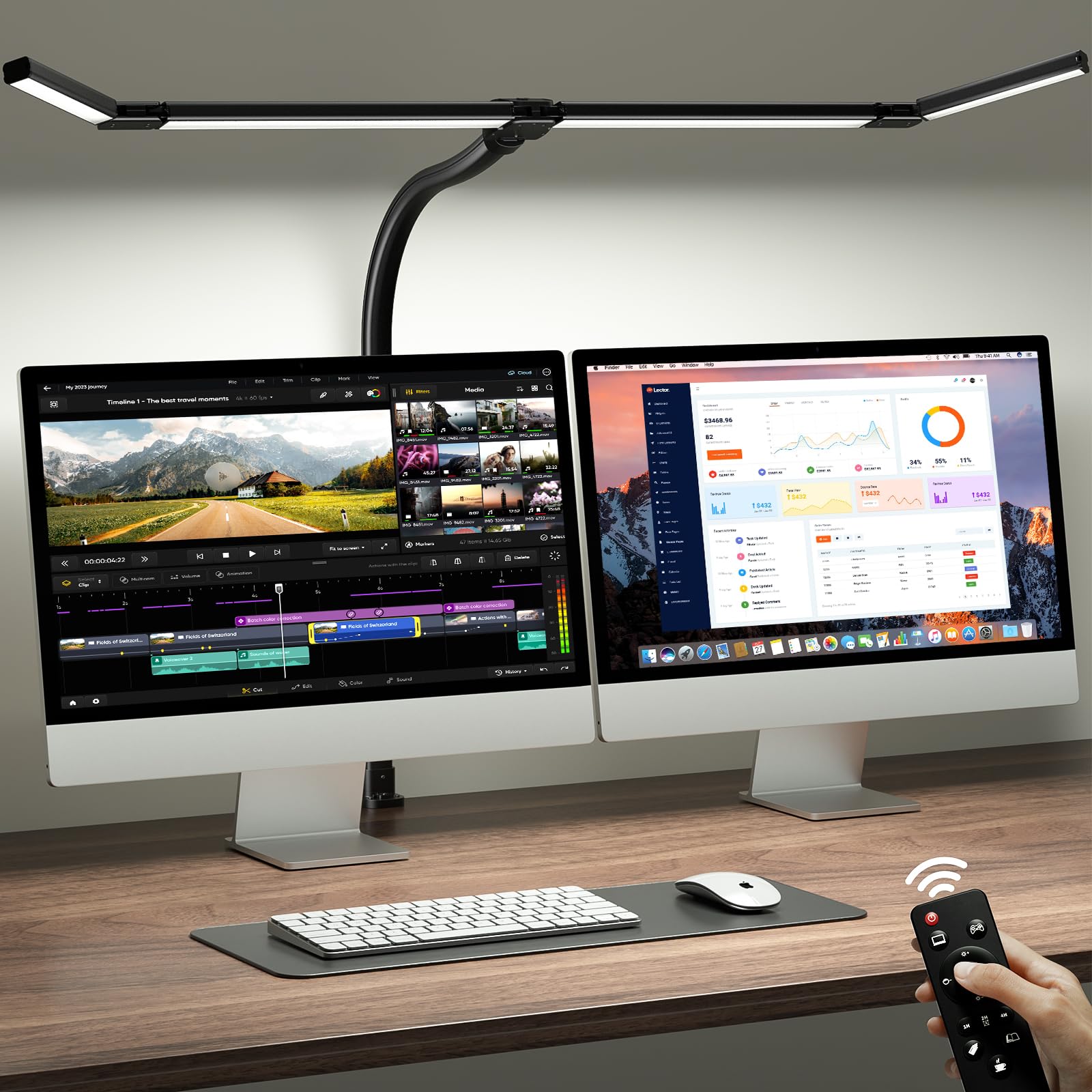
42" LED Desk Lamp with Clamp, Architect Desk Light with Remote, Adjustable
ONEMIX holds a 4.7 star average across 1,429 verified Amazon reviews. leon wrote: “This ONEMIX 42” LED desk lamp is fantastic! It comes with a sturdy clamp and a tall adjustable arm that positions the light bar perfectly over my dual monitors without any wobbling.The lighting is bright, even, and…”
- Ultra Wide & Super Bright Light Bar
- Adjustable Color Temperature & Brightness
- Remote & Button Control Options
- Eye Friendly & Energy Efficient
What we like
- Ultra Wide & Super Bright Light Bar: This 42 inch LED desk lamp features a 4 segment architect style light bar with independently…
- Adjustable Color Temperature & Brightness: This desk light features 5 brightness levels and 5 color temperatures (3200K 6500K), giving you…
- Remote & Button Control Options: Control the table lamp your way via built in buttons or the included wireless remote. Adjust brightness,…
- Eye Friendly & Energy Efficient: Premium eye caring LEDs provide soft, stable light with no flicker, no glare, and reduced blue…
Watch out for
- No common complaints in top verified reviews

Monitor Light Bar PRO+ with Remote Control, Fit for Curved/Flat Monitor
Quntis holds a 4.3 star average across 2,278 verified Amazon reviews. William Morgan wrote: “This is a great light bar.It fits my monitor perfectly and it’s easy to use. No eye strain whatsoever and it came with batteries for the remote as well. Gives my setup a classy look as well. Adjustment is easy with that…”
- Smart Remote Control
- Fits Most Monitors Savior for
- No Screen Glare & Flicker Easy on Your
- Auto Dimming & 2 Hr Rest Timer
What we like
- Smart Remote Control: New Quntis monitor bar light with a sensitive remote control that integrates multifunction control. You can easily…
- Fits Most Monitors Savior for Curved/Irregular Monitors: Quntis ScreenLinear Classic Pro is designed with an upgraded weighted clip that…
- No Screen Glare & Flicker Easy on Your Eyes: With 45° angled asymmetrical optical design, our curved monitor light bar only illuminates…
- Auto Dimming & 2 Hr Rest Timer: The built in ambient light sensor allows you to achieve the optimal illumination level for your working…
Watch out for
- This hurts to write
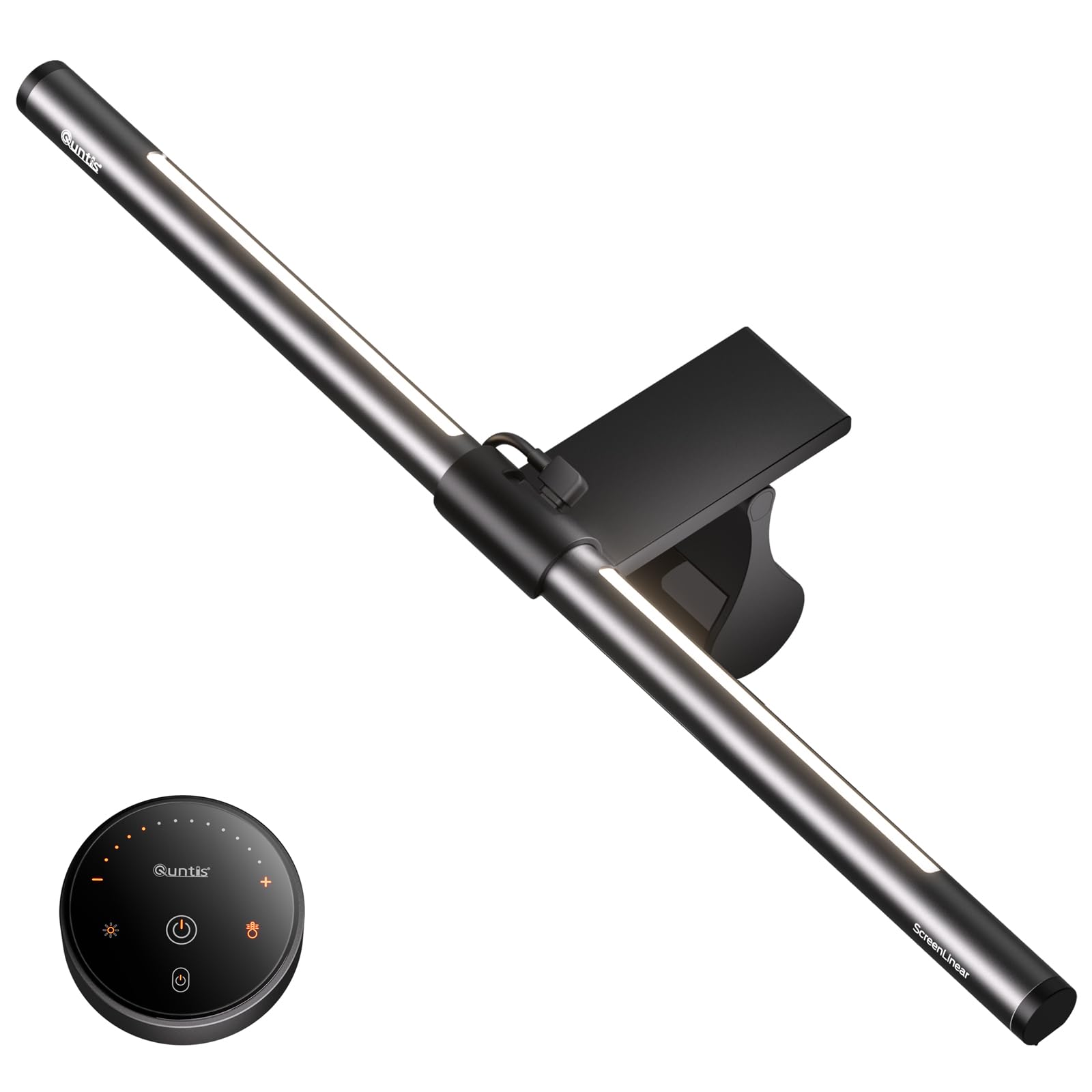
Computer Monitor Light Bar with Remote, Eye Care Monitor Light Backlight
Quntis holds a 4.7 star average across 898 verified Amazon reviews. Malak wrote: “I recommend this light bar to anyone looking for something of good quality, it might be a bit pricey but it's 100% worth it. I used to get all dizzy because of my low iron when I looked at my pc in the dark but this has…”
- Glare Free Lighting
- 3 Lighting Modes
- Patented Sliding Weighted Clip
- Smart Remote
What we like
- Glare Free Lighting, Comfortable Illumination Upgrade: Quntis monitor light bar features a dual protection design, combining optical…
- 3 Lighting Modes, Enhanced Eye Comfort: Our monitor lamp integrates front and back light sources to ensure uniform illumination for both…
- Patented Sliding Weighted Clip, Securely Hang in One Second: Say goodbye to mounting headaches on ultra thin bezel and curved monitors…
- Smart Remote, Intuitive Control at Your Fingertips: Our monitor light bar remote utilizes smart touch technology and precise touch…
Watch out for
- No common complaints in top verified reviews

ScreenBar Halo 2 LED Monitor Light Bar Wireless Controller, Backlight
BenQ holds a 4.7 star average across 824 verified Amazon reviews. Fred S wrote: “Thoroughly impressed with this device. I read through all of the reviews before buying, including negative, and can say my experience has been completely positive. I love the backlighting, though I wish it projected…”
- Wide and adjustable ambient backlight
- GLARE FREE FRONT LIGHT (ASYM Light
- The intuitive wireless dial controls
- Choose from stepless brightness levels
What we like
- Wide and adjustable ambient backlight reduces contrast between your screen and dark surroundings, helping your eyes stay relaxed and…
- GLARE FREE FRONT LIGHT (ASYM Light Technology): Precision front lighting at an 18° anti glare angle illuminates your desk without…
- The intuitive wireless dial controls brightness, color temperature, and modes, with a built in display showing precise values for easy…
- Choose from stepless brightness levels and a wide color temperature range (2700K 6500K) to suit different times of day and tasks.
Watch out for
- No common complaints in top verified reviews

Led Desk Lamp for Home Office, Eye Care Architect Light with Clamp, Smart
Motumen holds a 4.7 star average across 1,994 verified Amazon reviews. Tyrnee wrote: “This is a great desk lamp and honestly better than I expected. The remote control is a game changer I can turn it on and off from across the room without getting up, which feels very “future me” and I’m not mad about…”
- Super Bright & Eye Caring
- Customizable Lighting & Memory Function
- Flexible Goose Neck & Space Saving Design
- Remote & Button Control with Timer
What we like
- Super Bright & Eye Caring: This LED desk lamp features a dual head design for a wider lighting range, delivering high brightness while…
- Customizable Lighting & Memory Function: Offers 5 color temperatures (3000K 6500K) and 5 brightness levels (20% 100%) for personalized…
- Flexible Goose Neck & Space Saving Design: Adjustable goose neck allows precise light positioning; Compact clamp design saves desk space…
- Remote & Button Control with Timer: Adjust brightness and color with a remote (up to 32.8 ft/10 m range) or on lamp button controls;…
Watch out for
- Black lamp purchase but it doesn't have buttons on top of lamp like picture instead on attached plug in wire

Monitor Light RGB Backlight, Eye Care Computer Lights Bar Gaming Office
Quntis holds a 4.5 star average across 1,126 verified Amazon reviews. iasiah murray wrote: “This light illuminates my desk space perfectly. Instillation was a breeze and the 3 settings are perfect. I like that it’s not so bright that it lights up my entire room. The backlights are a nice touch as well. I would…”
- Front & Back Dual Light Source
- Dimmable RGB Backlight & Exciting Gaming
- No Blue Light Hazard & Flicker Free
- 3 Color Temperatures & Adjustable
What we like
- Front & Back Dual Light Source, Enhanced Eye Comfort: Quntis monitor light bar features an innovative design with complementary front and…
- Dimmable RGB Backlight & Exciting Gaming Lighting Experience: With 15 mode colors backlight to choose from, completely change your…
- No Blue Light Hazard & Flicker Free Lighting: Our computer light bar with backlight effectively eliminates harmful blue light that may…
- 3 Color Temperatures & Adjustable Brightness: ScreenLinear computer monitor light can be adjusted to three levels of brightness and color…
Watch out for
- No common complaints in top verified reviews
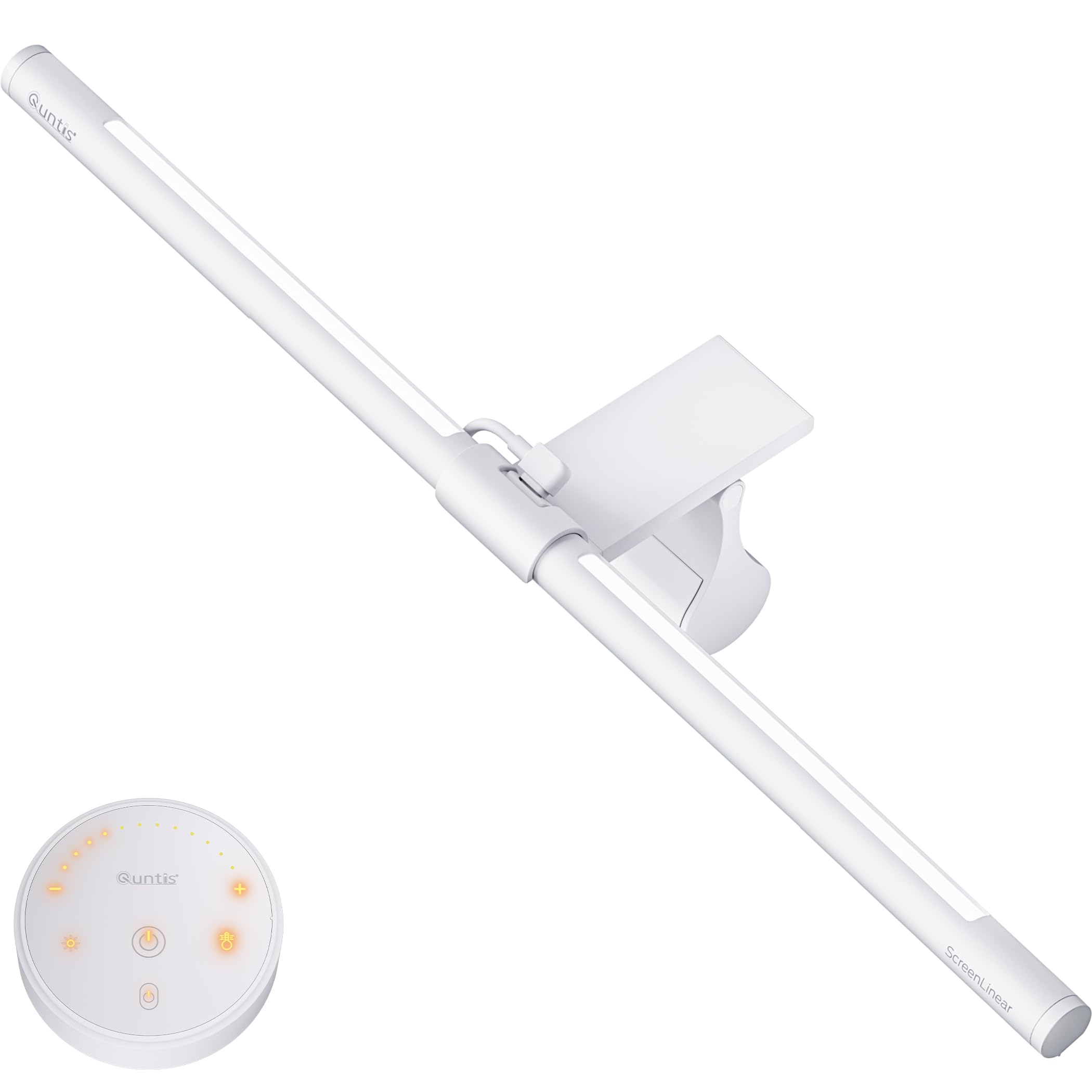
Monitor Light Bar with Remote, Eye Care No Glare, Space Saving Home Office
Quntis holds a 4.7 star average across 898 verified Amazon reviews. Malak wrote: “I recommend this light bar to anyone looking for something of good quality, it might be a bit pricey but it's 100% worth it. I used to get all dizzy because of my low iron when I looked at my pc in the dark but this has…”
- Effortless Lighting
- Two Way Lighting
- CRI 95 True Colors Day & Night
- Minimalist Lighting Maximum Space
What we like
- Effortless Lighting, Elevated Workspace: Quntis ScreenLinear monitor light bar blends functionality with beauty. Say goodbye to bulky desk…
- Two Way Lighting, One Glare Free Glow: Our front light and innovative backlight reduce glare from high contrast, ensuring eye comfort.…
- CRI 95 True Colors Day & Night: As night falls, our white monitor lamp becomes your guiding light. Crafted with 84 high quality LED…
- Minimalist Lighting Maximum Space: Our newly designed sliding weighted clip lamp not only saves desk space but also delivers a stylish…
Watch out for
- No common complaints in top verified reviews
Frequently Asked Questions
Do monitor light bars actually reduce eye strain?
Yes. Monitor light bars illuminate your desk and keyboard without casting glare on the screen, which reduces the contrast between a bright monitor and a dark room. This contrast is a major cause of digital eye strain, headaches, and fatigue. By lighting the area around your screen evenly, a monitor bar creates a more comfortable visual environment for extended work sessions.
Do monitor light bars work on curved monitors?
Most monitor light bars work on curved monitors, but compatibility depends on the clamp design and the monitor bezel thickness. Some bars use flat clamps that do not grip curved bezels securely. Look for models with adjustable or weighted clamps specifically designed for curved displays. BenQ ScreenBar and Xiaomi Mi Light Bar both list curved monitor compatibility, though very tight curves (1000R) may still pose issues.
What color temperature is best for a desk monitor light?
For daytime productivity, 4000 5000K (neutral to cool white) promotes alertness and reduces drowsiness. For evening use, switch to 2700 3000K (warm white) to minimize blue light exposure that can disrupt sleep. The best monitor light bars offer adjustable color temperature so you can shift from cool during the day to warm at night. Auto dimming models adjust both brightness and temperature automatically based on ambient light.
Can I use a regular desk lamp instead of a monitor light bar?
You can, but desk lamps take up valuable desk space and often create screen glare because they are not designed to direct light downward onto the desk while shielding the monitor. Monitor light bars mount directly on top of your display, use asymmetric optics to illuminate only the desk surface, and take up zero desk space. The focused, glare free lighting is the main advantage over a traditional lamp.
How bright should a monitor light bar be?
Aim for 300 500 lux on your desk surface, which is the recommended range for office work. Most quality monitor light bars achieve this at medium brightness settings. Too bright creates its own eye strain; too dim fails to reduce screen to room contrast. Models with stepless dimming let you dial in the perfect level. An auto dimming sensor that adjusts brightness based on ambient light is the most convenient option.
The Bottom Line
A monitor light bar is a simple, space saving upgrade that meaningfully reduces eye strain during long work sessions. Focus on mounting compatibility with your specific monitor, adjustable color temperature for day to night comfort, and stepless dimming for precise brightness control.
Pair your monitor light with a clean desk setup, a desk organizer and a laptop stand complete the ergonomic home office. Once you experience glare free desk lighting, you will wonder how you ever worked without it.
Opens your browser's print dialog. Choose Save as PDF as the destination.
People also search for
- Amazon Basics vs Nulaxy Phone Stand
- Amazon vs Kasa Smart Smart Plug
- DIMONCOAT vs Nulaxy Phone Stand
- best monitor light for desk
- best phone stand for everyday use
- Best Affordable Home Office Setup: A Complete Desk Upgrade Guide
- Best Budget Back to School Tech: Budget Gadgets Every Student Needs
- Best Laptop Stands for Home Office 2026